Interventionist Democracy
Foreign policy doctrine associated with the 2002 US strategy. It favours military force and preemptive action against threats, alongside the international promotion of democracy, open markets and US-led alliances.
Home / Ideologies / Interventionist Democracy
Foreign policy doctrine associated with the 2002 US strategy. It favours military force and preemptive action against threats, alongside the international promotion of democracy, open markets and US-led alliances.
In one sentence
I want democracies and open markets protected by strong alliances, with preemptive military action against security threats.
Political axes
Leans further toward militarist than 98% of the 260 ideologies in the catalog.
Of all the axes, Diplomacy is where it stands furthest from the rest.
On Immigration, it sits practically at the catalog median.
Here it shares common ground with most ideologies.
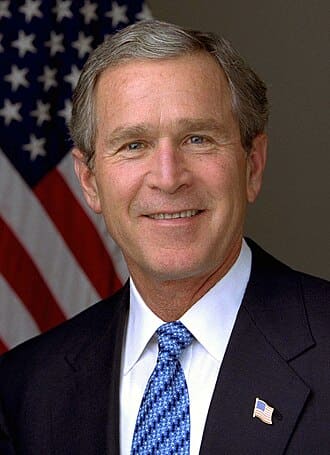
An American statesman, George W. Bush united religious conservatism, tax cuts, and a neoconservative foreign policy, marked by the War on Terror and the invasions of Afghanistan and Iraq.
Closest, by dimension



Other compatible profiles






The most distant
Reference country

A global power and presidential federal republic, the United States combines a strong liberal tradition, a dynamic market economy, technological innovation, and a two-party system that polarizes national political life.
Other close countries
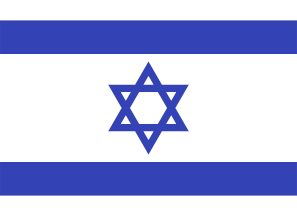
A parliamentary republic in the Middle East, Israel combines a vibrant democracy, a strong Jewish national identity, an advanced technology economy, and a prolonged conflict with the Palestinians that dominates its politics and security.
Also close, by dimension



The most distant
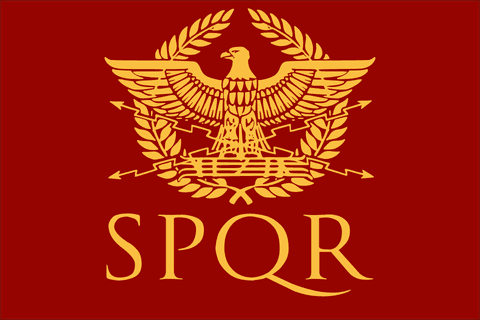
An aristocratic republic of antiquity, Rome balanced consuls, Senate, and tribunes of the plebs in a mixed system of elective magistracies, expanding across the Mediterranean through citizen legions and a strong cult of civic virtue.
Also close, by dimension


The most distant
Ideological proximity
Closest within Right
Right-wing current that unites free markets, traditional values, and an interventionist foreign policy, advocating the promotion of democracy and national interests through military force and global leadership.
Right-wing current that combines free markets, free trade, and limited government with strong national identity, cultural assimilation, traditional and religious values, and a robust military.
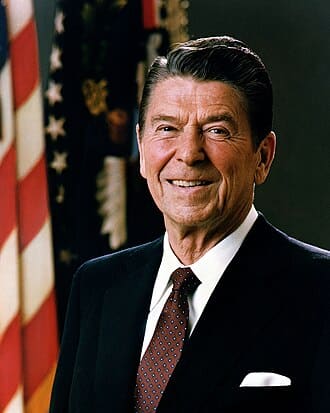
American conservative current associated with Ronald Reagan. It combines lower taxes and a smaller federal economic role with free enterprise, traditional religious values, anticommunism and military strength.
Closest in other spectrums
Political tradition of the nineteenth-century American South tied to the Confederacy, defending states' rights and secession, an agrarian, patriarchal and Christian society, free trade and a military tradition. Historically, this tradition also defended slavery and racial hierarchy.
Tradition of republics made of sovereign provinces or cantons, such as the Dutch Republic and the old Swiss Confederacy, with local self-government, open trade, armed neutrality and deep-rooted Protestant faith.
A doctrine combining a minimal state in taxation, regulation and morals with strong armed forces and an armed citizenry: national defense is the one expanded state function, treated as the condition of civil liberty rather than its exception.
The most distant ideology
CommunalismAnarchist27%